You have noticed the changes. Maybe it is the softening of your jawline, the deepening of lines around your mouth, or the way your cheeks have lost the fullness they once had. You look in the mirror and you still feel like yourself — but the reflection is not quite keeping up.
You have started researching your options. And very quickly, you have discovered that the world of facial rejuvenation is vast, sometimes confusing, and full of competing claims about what works, what lasts, and what is worth your money.
Facelifts. Botox. Fillers. Thread lifts. Ultherapy. The list goes on.
So how do you make sense of it all? And more importantly — how do you know which option is right for your face, your goals, and your life?
This guide is designed to cut through the noise. We will walk you through the most popular surgical and non-surgical facial rejuvenation options available today, explain honestly what each one can and cannot achieve, and help you ask the right questions when you sit down with a surgeon.

Understanding What Happens to the Face as We Age
Before comparing treatments, it helps to understand what you are actually treating.
Facial aging is not a single process — it is several happening simultaneously. The skin loses collagen and elastin, causing it to thin, loosen, and develop fine lines and wrinkles. The underlying fat compartments of the face — the ones responsible for the plump, lifted appearance of youth — shrink and shift downward over time. The muscles of the face weaken. And the bones of the skull subtly change shape, reducing the scaffolding that once supported everything above.
The result is the familiar constellation of aging signs: sagging jowls, a less defined jawline, deepening nasolabial folds (the lines running from the nose to the corners of the mouth), hollowing under the eyes, and a general loss of the upward projection that characterizes a youthful face.
Why does this matter? Because different treatments address different layers of this process. A treatment that works beautifully on the skin’s surface will not correct structural descent. A treatment that restores volume will not tighten loose skin. Understanding this is the foundation of making an informed decision.
The Non-Surgical Options: What They Can Do
Non-surgical treatments have advanced enormously over the past decade. For the right patient at the right stage of aging, they deliver genuinely impressive results. Here is an honest look at the most widely used options.
Botulinum Toxin (Botox and Its Equivalents)
Botox remains one of the most popular cosmetic treatments in the world, and for good reason. By temporarily relaxing the muscles responsible for dynamic wrinkles — the lines that form when you frown, squint, or raise your eyebrows — it produces a smoother, more rested appearance with no downtime and minimal discomfort.
Botox is highly effective for crow’s feet, forehead lines, and the vertical lines between the eyebrows. It can also be used skillfully to achieve a subtle brow lift, soften a gummy smile, or slim the appearance of a wide jawline caused by enlarged masseter muscles.
What it cannot do is address skin laxity, jowling, or the structural descent that comes with significant aging. It works on muscle movement — nothing else.
Results last three to six months, after which the treatment must be repeated to maintain the effect.
Dermal Fillers
Injectable fillers — most commonly made from hyaluronic acid — restore lost volume and can be used to sculpt and lift specific areas of the face. In skilled hands, they are extraordinarily versatile. Fillers can restore cheek projection, soften under-eye hollows, redefine the jawline, plump thinning lips, and fill deep nasolabial folds.
The results can be beautiful. But there are important caveats.
Fillers replace volume — they do not lift or tighten tissue that has descended. Used excessively or incorrectly, they can create an overfilled, unnatural appearance. And because they require repeat treatment every twelve to eighteen months, the long-term cost accumulates significantly.
For patients in their late 30s or early 40s experiencing early volume loss, fillers can be a genuinely excellent solution. For patients with more advanced aging and significant skin laxity, they address only part of the picture.
Thread Lifts
Thread lifts involve the insertion of dissolvable sutures under the skin to physically lift and reposition sagging tissue. They sit somewhere between non-surgical and minimally invasive — there are no incisions, but the procedure does involve needles and local anesthesia.
Results are immediate but modest, and the longevity is limited — typically one to two years. Thread lifts work best for patients with mild to moderate sagging who want a subtle improvement without committing to surgery. They are not a substitute for a facelift in patients with significant laxity, and attempting to use them as one tends to produce disappointing results.
Energy-Based Treatments: Ultherapy, Thermage, and Radiofrequency
These technologies use ultrasound, radiofrequency, or laser energy to stimulate collagen production in the deeper layers of the skin. The idea is that by triggering the body’s natural healing response, you encourage the skin to firm and tighten from within.
The results are real but subtle — and they take time to develop, typically appearing gradually over three to six months. They work best as maintenance treatments for patients with mild laxity, or as complements to other procedures. They are not suited to moderate or advanced facial aging, and patients who expect dramatic improvement are often disappointed.
The Surgical Option: What a Facelift Actually Does
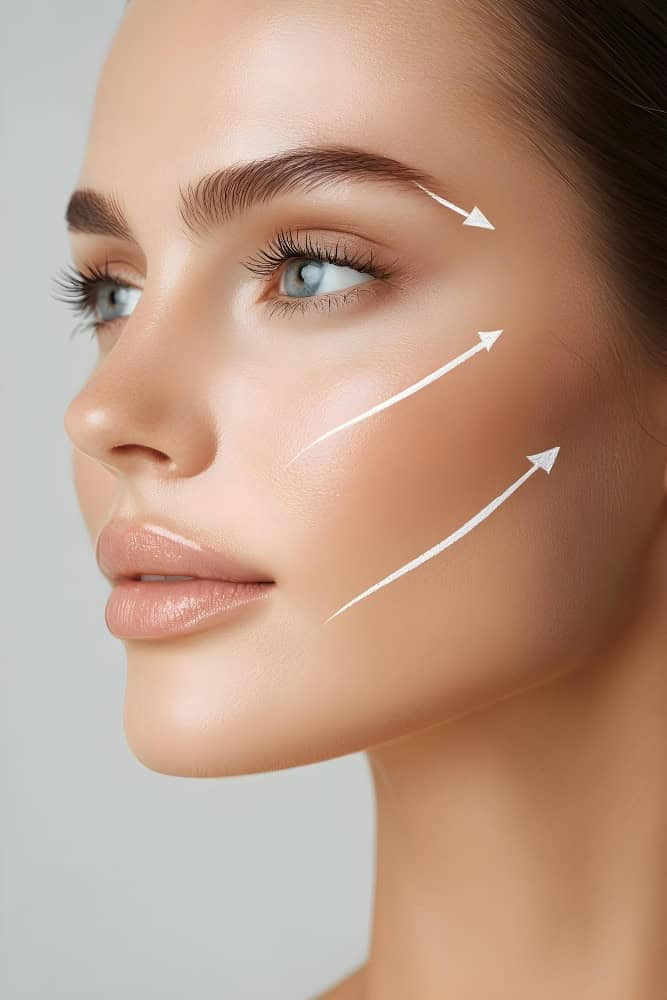
A facelift — or rhytidectomy, to use its medical name — is the only treatment that directly addresses the structural changes of facial aging at every level.
A modern facelift does not simply pull the skin tight, as older techniques did. Today’s approach — known as the SMAS facelift — works on the deeper muscular and fascial layer of the face, repositioning the underlying structure before addressing the skin above it. The result is a natural, long-lasting lift that restores the facial architecture of youth rather than simply stretching the surface.
At Hygeia, facelifts are tailored entirely to the individual patient. There is no single technique applied uniformly. The surgical plan is built around your anatomy, the specific changes you want to address, and the degree of rejuvenation you are looking for.
What a Facelift Can Address
A well-executed facelift can achieve what no non-surgical treatment can replicate: the repositioning of descended tissue, the elimination of jowling, the restoration of a defined jawline, and the removal of excess skin that has accumulated over decades.
It can take ten to fifteen years off a person’s appearance — not by making them look like someone else, but by restoring the version of themselves they remember. The effect is comprehensive and long-lasting in a way that no injectable or energy device can match.
Types of Facelift
Not every facelift is the same, and the right approach depends on the extent of aging being addressed.
A mini facelift is a less extensive procedure suited to patients with early to moderate jowling and skin laxity. It involves smaller incisions, a shorter recovery, and targets the lower face and jawline specifically. It is an excellent option for patients in their 40s and early 50s who want meaningful improvement without the commitment of a full procedure.
A full facelift addresses the mid-face, lower face, jowls, and neck comprehensively. It is the appropriate choice for patients with more advanced aging and is the procedure that delivers the most dramatic, enduring results.
A neck lift is frequently performed in combination with a facelift to address sagging and banding in the neck — an area that ages visibly and is not fully addressed by facial procedures alone.
During your consultation at Hygeia, your surgeon will assess your face as a whole and recommend the approach most appropriate to your goals and anatomy.
Recovery from a Facelift
It is honest and important to acknowledge that a facelift involves a real recovery period. This is not a lunchtime procedure.
In the first week, swelling and bruising are significant. Most patients feel comfortable at home but are not ready to be seen publicly. By week two, the majority of bruising has resolved and swelling is noticeably reduced. Most patients return to normal social activities — with some makeup coverage if desired — between ten days and two weeks post-surgery.
Full recovery, including the resolution of deeper swelling and the final settling of the result, takes several months. But the vast majority of patients are back to their normal lives well within a month.
The result, once fully healed, typically lasts seven to ten years — far beyond anything achievable with non-surgical alternatives.
So Which Is Right for You?
The honest answer is: it depends on where you are in the aging process and what you are trying to achieve.
If you are in your mid-30s to early 40s with good skin elasticity and early signs of aging — fine lines, mild volume loss, the first hints of change — non-surgical treatments may serve you very well for now. Botox and fillers, used thoughtfully by a skilled practitioner, can maintain a fresh and youthful appearance and delay the need for surgery.
If you are in your mid-40s to 50s with moderate jowling, visible skin laxity, and a jawline that is no longer as defined as it once was, you are at the point where non-surgical treatments will begin to fall short. A mini facelift or full facelift will deliver results that no amount of filler or energy treatment can replicate — and the investment will be longer-lasting.
If you are in your 60s or beyond with significant facial aging, a surgical approach is almost certainly the most effective path to the meaningful transformation you are looking for.
The most important thing is not to spend years layering non-surgical treatments in an attempt to avoid surgery, only to arrive at surgery later with less ideal tissue quality. A candid conversation with a plastic surgeon — not just an aesthetic practitioner — will give you an honest picture of where you are, what your options genuinely are, and what each one can realistically achieve.
The Hygeia Approach: Honest Guidance, Tailored Results
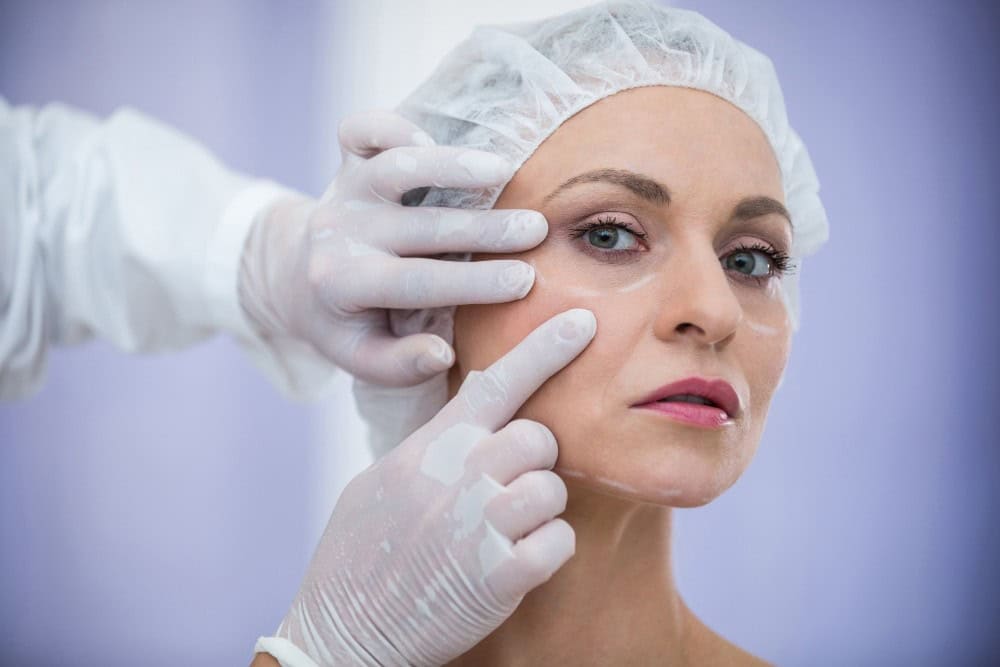
At Hygeia Hospital in Tirana, the consultation process is built around exactly that kind of honesty. The surgical team does not push patients toward procedures they do not need, nor do they minimize the commitment that surgery involves. What they offer is a clear-eyed assessment of your face, your goals, and the most effective path to achieving them.
Whether you are exploring non-surgical maintenance, considering a mini facelift for the first time, or ready to discuss a full facial rejuvenation plan, the team at Hygeia has the expertise to guide you to the right decision — and the skill to deliver outstanding results once that decision is made.
Begin With a Conversation
The best way to know which option is right for you is to speak with someone who can assess your face in person — or, for international patients, via a detailed video consultation.
Book your consultation with Hygeia Hospital today and get the honest, expert guidance you need to move forward with confidence.