Otoplasty in Albania | Hygeia Hospital
What is Otoplasty?
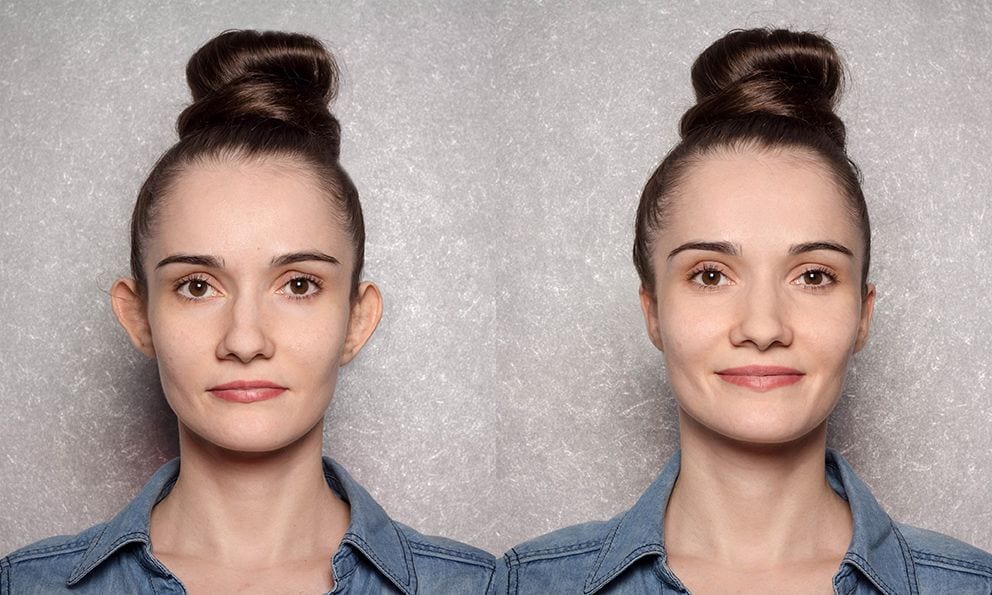
Otoplasty (ear surgery) surgically corrects ear shape, size, position, or proportion through precise cartilage modification. The procedure most commonly addresses protruding ears (prominent ears) that stick out excessively from the head, causing self-consciousness and psychological distress particularly in children and adolescents. Beyond cosmetic correction, otoplasty also reconstructs ears damaged by injury or addresses congenital deformities affecting ear structure.
Prominent ears typically result from underdeveloped antihelical fold—the curved inner cartilage ridge that normally folds back toward the head. When this fold fails to develop properly during fetal development, ears protrude noticeably. Excessive conchal cartilage (the bowl-shaped depression near the ear canal) also contributes to prominence. Otoplasty surgically recreates the antihelical fold and reduces excess conchal cartilage, repositioning ears closer to the head at natural angle.
The psychological impact of prominent ears, particularly on children facing teasing or bullying, makes otoplasty one of the few cosmetic procedures commonly performed on younger patients. Adults who lived with prominent ears throughout childhood often report significant confidence improvement after correction, wishing they’d pursued surgery earlier.
The best otoplasty results appear completely natural—ears positioned at normal angle without looking pinned back, operated, or asymmetric. Achieving this requires understanding complex three-dimensional ear cartilage anatomy, respecting natural ear contours and proportions, and executing precise modifications that create permanent shape change without visible surgical evidence.
What are the Otoplasty Options?
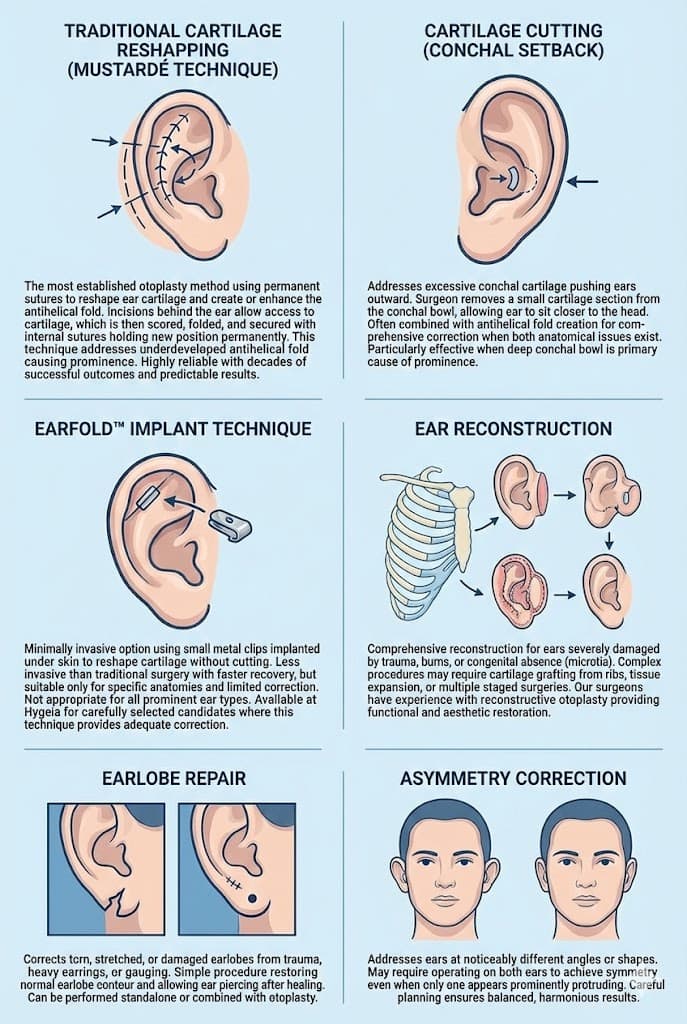
Traditional Cartilage Reshaping (Mustardé Technique)
The most established otoplasty method using permanent sutures to reshape ear cartilage and create or enhance the antihelical fold. Incisions behind the ear allow access to cartilage, which is then scored, folded, and secured with internal sutures holding new position permanently. This technique addresses underdeveloped antihelical fold causing prominence. Highly reliable with decades of successful outcomes and predictable results.
Cartilage Cutting (Conchal Setback)
Addresses excessive conchal cartilage pushing ears outward. Surgeon removes a small cartilage section from the conchal bowl, allowing ear to sit closer to the head. Often combined with antihelical fold creation for comprehensive correction when both anatomical issues exist. Particularly effective when deep conchal bowl is primary cause of prominence.
Earfold™ Implant Technique
Minimally invasive option using small metal clips implanted under skin to reshape cartilage without cutting. Less invasive than traditional surgery with faster recovery, but suitable only for specific anatomies and limited correction. Not appropriate for all prominent ear types. Available at Hygeia for carefully selected candidates where this technique provides adequate correction.
Ear Reconstruction
Comprehensive reconstruction for ears severely damaged by trauma, burns, or congenital absence (microtia). Complex procedures may require cartilage grafting from ribs, tissue expansion, or multiple staged surgeries. Our surgeons have experience with reconstructive otoplasty providing functional and aesthetic restoration.
Earlobe Repair
Corrects torn, stretched, or damaged earlobes from trauma, heavy earrings, or gauging. Simple procedure restoring normal earlobe contour and allowing ear piercing after healing. Can be performed standalone or combined with otoplasty.
Asymmetry Correction
Addresses ears at noticeably different angles or shapes. May require operating on both ears to achieve symmetry even when only one appears prominently protruding. Careful planning ensures balanced, harmonious results.

The Best Candidates for Otoplasty are patients with…
Otoplasty At a Glance
| Surgery Time | 1 to 2 hours |
| Anesthesia | General for children, local with sedation for adults |
| Hospital Stay | Day case (same-day discharge) |
| Albania Stay | 5-7 days recommended |
| Headband Duration | 1 week continuously, then 3-6 weeks at night |
| Time Off Work/School | 7-10 days |
| Exercise | Light after 2 weeks, contact sports after 6 weeks |
| Shower/Hair Washing | After 2-3 days (carefully) |
| Sleeping Position | On back with head elevated for 2 weeks |
| Driving | After 1 week |
| Full Recovery | 4-6 weeks for major activities |
| Final Results | 3-6 months as swelling resolves completely |
| Results Longevity | Permanent |
The Cost of Otoplasty in Albania
Otoplasty cost at Hygeia Hospital ranges €1,500-2,800 depending on complexity and whether one or both ears require correction. This represents 60-70% savings compared to Western Europe while maintaining identical EU medical standards, board-certified surgical expertise, and modern facility specifications.
Otoplasty pricing in Albania:
- One ear correction: €1,500-2,000
- Both ears correction: €1,800-2,500
- Complex reconstruction: €2,500-3,500
- Earlobe repair only: €400-700
- Revision otoplasty: €2,200-3,200
Compare Western Europe ear surgery costs:
- UK: €4,000-7,500 (60-65% more expensive)
- Germany: €4,500-8,000 (62-65% more expensive)
- Switzerland: €5,000-9,000 (65-70% more expensive)
- Italy: €3,800-6,500 (58-60% more expensive)
- France: €4,200-7,200 (60-62% more expensive)
Even accounting for international travel expenses—flights €100-400 return from most European cities, accommodation €30-80 nightly for 5-7 days—total investment remains substantially lower while receiving equivalent surgical expertise, safety standards, and care quality.
Transparent pricing includes: Board-certified surgeon’s professional fee, anesthesiologist’s fee (pediatric anesthesiologist for children), modern hospital facility costs including EU-standard operating theatre, all surgical supplies and specialized instruments, post-operative headband, medications during hospital stay and prescribed for home recovery, post-operative appointments during Albania stay, detailed written aftercare instructions, and 24-hour emergency contact support.
No hidden fees appear later. Hygeia provides itemized quotes during video or in-person consultation specifying exactly what’s included. Additional expenses to budget include accommodation (€150-560 for typical 5-7 day stays), flights (€100-400 return depending on departure city), and local transportation and meals which cost significantly less than Western European cities.
Medical tourism Albania packages for families: International patient coordinators arrange family-friendly packages when parents bring children for otoplasty, including family accommodation near Hygeia Hospital, child-appropriate meals, entertainment recommendations during recovery, and comprehensive support ensuring comfortable experience for young patients and parents.
What are the Benefits of Otoplasty?
Dramatically Enhanced Self-Confidence
Prominent ears cause significant psychological distress, particularly for children and teenagers facing teasing, bullying, or social withdrawal. Otoplasty eliminates this source of self-consciousness, allowing natural engagement in social situations, sports activities, and school environments without constant awareness of ear appearance. Adults report wishing they’d pursued correction earlier, describing years of avoiding certain hairstyles, hats, or photographs.
Improved Facial Harmony and Proportion
Excessively prominent ears draw disproportionate attention, distracting from other facial features. Correcting ear position creates balanced facial proportions where ears frame the face naturally rather than dominating appearance. This subtle shift significantly improves overall aesthetic harmony.
Permanent, Stable Results
Otoplasty creates permanent structural change through cartilage reshaping and repositioning secured with internal sutures. Once healed, corrected ear position remains stable throughout life. Unlike temporary treatments requiring maintenance, otoplasty provides one-time permanent solution.
Natural-Looking Correction
Modern otoplasty techniques create ears positioned at natural angle without obviously pinned-back or operated appearance. Proper surgical technique respects individual ear anatomy, maintains natural contours, and achieves symmetric results appearing completely innate rather than surgically altered.
Suitable for Children and Adults
Otoplasty can be safely performed once ears reach near-adult size, typically around age 5-6. This allows correction before school years when teasing commonly occurs. Adults of any age can also benefit—cartilage remains responsive to surgical reshaping throughout life, making otoplasty effective regardless of age.
Hidden Surgical Evidence
Incisions behind the ear heal virtually invisibly, hidden in the natural crease where ear meets head. Even with short hairstyles or ears visible, surgical evidence remains imperceptible. This allows complete confidence without concern about visible scarring.
Psychological Benefits Extend Beyond Appearance
Research demonstrates otoplasty significantly improves quality of life measures including self-esteem, social confidence, body image satisfaction, and psychological wellbeing. Parents report children become more outgoing, confident, and engaged after correction. Adults describe feeling liberated from decades of self-consciousness.
Who is Suitable for Otoplasty Surgery?
Appropriate age begins around 5-6 years when ears reach approximately 90% of adult size. Operating at this age allows correction before school years when teasing commonly intensifies. Younger children must be emotionally mature enough to follow post-operative instructions, particularly wearing protective headband. Adults of any age are suitable candidates as cartilage remains responsive to reshaping throughout life. Most importantly, patients (or parents of young patients) should pursue otoplasty for personal wellbeing rather than external pressure.
Specific anatomical concerns suitable for otoplasty include prominent ears protruding excessively from the head (typically more than 20-25mm from scalp), underdeveloped or absent antihelical fold causing lack of normal ear curvature, excessive conchal cartilage pushing ears outward, asymmetric ears at noticeably different angles or shapes, cupped ear deformity (lop ear), Stahl’s ear deformity with extra cartilage fold, or ears damaged by trauma requiring reconstruction. During consultation, your surgeon evaluates specific anatomy determining which techniques achieve optimal correction.
Good general health without significant medical conditions allows safe surgery and optimal healing. Most healthy children and adults tolerate otoplasty well. Bleeding disorders, uncontrolled diabetes, active skin infections near ears, or significant cardiovascular disease require careful evaluation and possible medical clearance before proceeding.
Realistic expectations distinguish satisfied from disappointed patients. Otoplasty significantly improves ear position and prominence but doesn’t achieve absolute perfection or create identical ears—no one has perfectly symmetric ears naturally. Understanding that otoplasty creates substantial improvement approaching normal appearance rather than flawless symmetry ensures satisfaction with excellent but realistic outcomes. Minor asymmetries remaining after surgery typically go unnoticed by others.
Stable ear development in children ensures ears have reached sufficient size for permanent correction. Operating on ears still growing risks less predictable outcomes. Surgeons evaluate ear development during consultation, typically recommending surgery after age 5-6 when ear growth is nearly complete.
Commitment to post-operative care significantly influences results. Otoplasty requires wearing protective headband continuously for 1 week, then nightly for 3-6 weeks protecting ears during sleep when unconscious rolling might bend cartilage. Children must avoid rough play and contact sports for 6 weeks. Following detailed instructions ensures optimal healing, permanent correction, and minimal complication risk.
Understanding procedure permanence important particularly for parents making decisions for young children. Otoplasty creates permanent structural change that cannot be reversed. While results are highly predictable and satisfaction rates excellent, understanding the permanence ensures informed decision-making.
Best Otoplasty Surgeons in Albania
Hygeia Hospital’s otoplasty surgeons completed comprehensive plastic surgery residency training at European medical institutions followed by specialized experience in facial aesthetic and reconstructive surgery with particular focus on otoplasty and ear reconstruction. They perform regular otoplasty procedures on both pediatric and adult patients, bringing extensive experience with diverse ear anatomies, congenital deformities, traumatic injuries, and revision cases correcting previous unsatisfactory outcomes.
Training and credentials: All Hygeia otoplasty surgeons hold board certification from European plastic surgery examining boards and maintain active memberships in international plastic surgery societies. Their advanced training included rotations at renowned centers specializing in facial surgery and pediatric plastic surgery across European institutions. They remain current with evolving otoplasty techniques through regular attendance at international conferences and review of peer-reviewed surgical literature.
Pediatric surgical experience: Operating on children requires specialized skills beyond adult surgery—understanding pediatric anatomy, working with smaller structures, providing child-friendly communication, and ensuring appropriate anesthesia and post-operative care. Our surgeons have extensive pediatric experience creating comfortable, safe surgical experiences for young patients and supporting parents through the process.
Why surgical experience matters: Otoplasty requires understanding complex three-dimensional ear cartilage anatomy, predicting how cartilage responds to surgical manipulation, executing precise modifications creating permanent shape change without excessive weakening, achieving symmetric results on naturally asymmetric structures, and recognizing when asymmetry correction requires operating on both ears even when only one appears prominently protruding. These nuanced skills develop through dedicated focus and experience performing hundreds of otoplasty procedures.
Artistic sensibility and proportion: Beyond technical ability, successful otoplasty requires artistic judgment recognizing appropriate ear position for individual facial structures. Ears positioned too close create unnatural pinned-back appearance. Insufficient correction leaves residual prominence. Proper otoplasty achieves the Goldilocks position—ears at natural angle framing face harmoniously without drawing attention. This aesthetic judgment distinguishes competent from exceptional surgeons.
Individualized surgical planning: During consultation, Hygeia surgeons carefully evaluate your specific ear anatomy identifying which structures contribute to prominence, discuss realistic achievable outcomes based on your starting anatomy, explain which techniques suit your particular case, show before-and-after photo galleries demonstrating diverse cases and results, address all questions and concerns thoroughly, and create individualized surgical plans tailored to your unique anatomy and goals rather than applying standardized approaches.
What to Expect: Your Otoplasty Journey
Initial Consultation
Your otoplasty journey begins with comprehensive consultation where your surgeon examines ear anatomy from multiple angles evaluating antihelical fold development, conchal depth, ear-to-head distance, ear size and proportion, asymmetry, and cartilage quality; discusses specific concerns about ear appearance and any psychological impact; reviews medical history with particular attention to bleeding disorders, previous ear surgery or trauma, and skin healing history; explains which techniques address your specific anatomy; shows before-and-after photo galleries demonstrating various correction types; discusses realistic expectations including normal minor asymmetries; addresses all questions thoroughly including anesthesia details particularly important for parents of young patients; and provides detailed itemized cost estimates.
International patients schedule initial video consultations allowing thorough case discussion and preliminary recommendations before traveling to Albania. Ear photographs from multiple angles enable accurate assessment. When proceeding with surgery, coordinators assist with family-friendly accommodation when traveling with children, flight bookings, airport transfer arrangements, and all logistical planning.
Pre-operative Preparation
Weeks before surgery, discontinue medications and supplements increasing bleeding risk including aspirin, ibuprofen, naproxen, vitamin E, fish oil, and certain herbal supplements. For children, ensure emotional preparation through age-appropriate discussion about what to expect, addressing any fears or concerns. Arrange appropriate time off work or school and assistance at home during initial recovery. Purchase or receive prescribed protective headband. Follow specific instructions about eating, drinking, and medication use the night before and morning of surgery.
Surgery Day
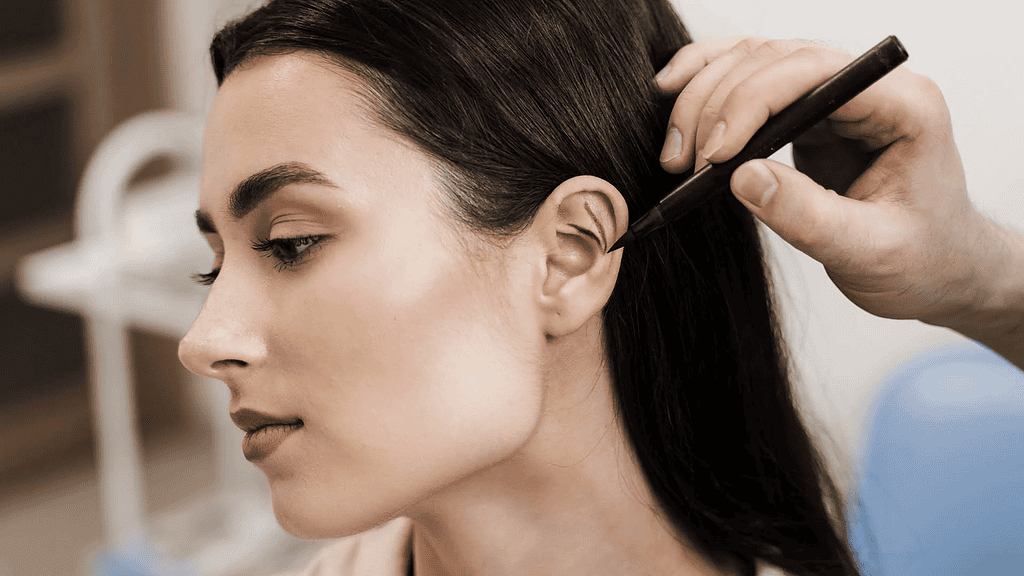
Surgery day begins with meeting your surgical team and anesthesiologist who reviews medical history, confirms anesthesia plan appropriate for age and medical status, and answers final questions. For young patients, child-friendly communication and parent support ensure comfort and cooperation. Your surgeon performs final surgical marking and planning, takes standardized pre-operative photographs from multiple angles, and confirms the precise surgical approach.
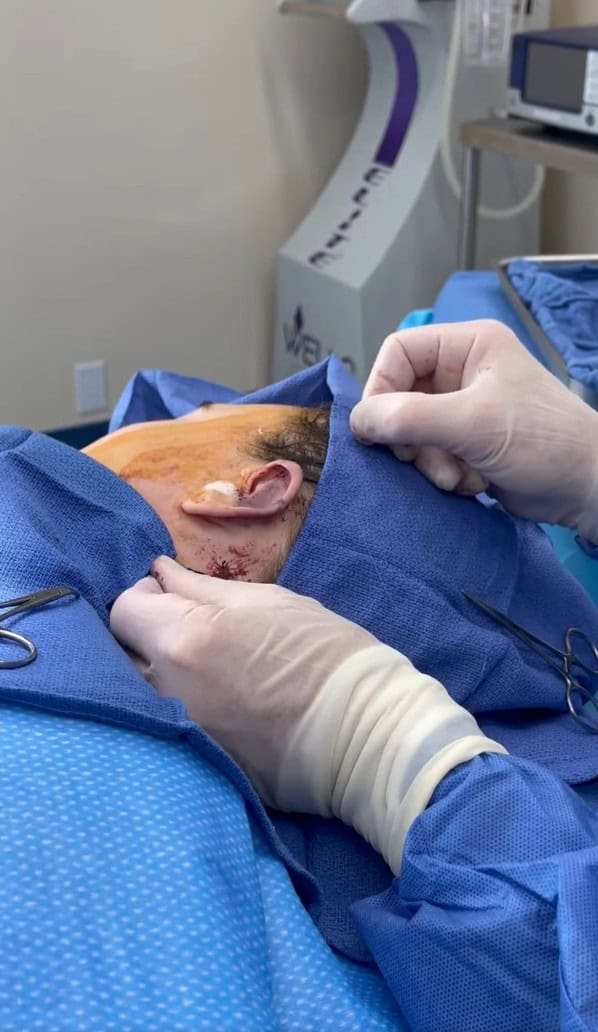
Children receive general anesthesia ensuring comfort and stillness during surgery. Adults typically receive local anesthesia with intravenous sedation, though general anesthesia remains an option. Surgery proceeds in the modern operating theatre over 1-2 hours depending on complexity. The surgeon makes incisions behind ears, reshapes cartilage using appropriate technique for your anatomy, secures new position with internal sutures, and closes incisions with fine sutures. Soft dressings and protective headband applied at surgery completion. After surgery, patients recover under nursing observation for several hours before discharge home same day with detailed care instructions.
Recovery Timeline
Days 1-3: Rest with head elevated, manage mild to moderate discomfort with prescribed pain medication (children receive appropriate pediatric formulations), keep headband dry and in place, avoid touching or manipulating ears. Most patients describe soreness, tightness, and throbbing rather than severe pain. Swelling and some bruising expected. Children may be irritable initially but typically adapt quickly.
Days 4-7: Improving daily. First follow-up appointment typically day 5-7 when surgeon removes outer dressings, evaluates healing, and provides protective headband to continue wearing. Ears look swollen and may appear over-corrected initially—this is normal and settles over weeks. Can shower carefully, avoiding direct water pressure on ears.
Weeks 2-4: Swelling decreasing noticeably. Headband worn at night only (no longer during day) to protect ears during sleep. Most patients return to work/school after 7-10 days. Avoid activities that might bend or trauma ears. Light non-contact activities permitted.
Weeks 4-6: Significant improvement visible. Can discontinue night headband after 3-6 weeks as surgeon directs. Ears settling into final position. Avoid contact sports or activities risking ear trauma until surgeon clearance typically 6 weeks post-surgery.
Months 3-6: Final refinement as last traces of swelling resolve completely. Incision scars fading to near-invisibility. True final ear position established, appearing natural and proportionate. Permanent results now stable.
Long-term Follow-up
Scheduled appointments during your Albania stay allow surgeon monitoring of healing, dressing removal, headband fitting adjustment, and guidance provision. After returning home, maintain contact through photographs and email updates if questions arise. Most patients don’t require in-person follow-up beyond initial week as healing progresses predictably following detailed written instructions provided. However, Hygeia remains available for any concerns.
Meet the team
Facial Surgery