
The eyes are the first thing people notice about a face. They are also one of the first areas to show the visible signs of ageing — and for many people, the changes that appear around the eyes begin to affect not just how they look, but how they feel about themselves, and in some cases, how well they can see.
Blepharoplasty — eyelid surgery — is one of the most effective and consistently well-regarded procedures in facial plastic surgery. It addresses excess skin, herniated fat, and muscle laxity around the eyelids with precision and relatively modest recovery. When performed correctly, the results are natural, long-lasting, and significant without appearing surgical.
This guide covers everything you need to make an informed decision: what blepharoplasty treats, how upper and lower eyelid surgery differ, what the procedure involves, what recovery actually looks like, and what results are realistic.
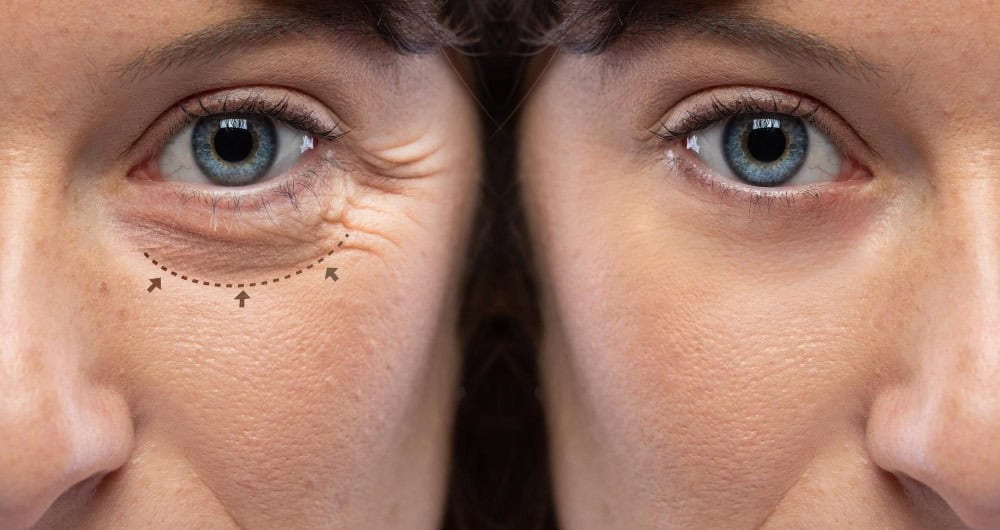
What Does Blepharoplasty Treat?
Blepharoplasty is not a single procedure — it is a category of surgical interventions that can be applied to the upper eyelids, the lower eyelids, or both, depending on what needs to be addressed.
Upper eyelid blepharoplasty typically addresses:
- Excess, overhanging skin on the upper eyelid that creates a heavy or hooded appearance
- Drooping of the upper eyelid that obstructs the visual field (a functional as well as cosmetic concern)
- Puffiness or fullness in the upper eyelid caused by herniated fat
- An overall tired or aged appearance caused by upper eyelid laxity
Lower eyelid blepharoplasty typically addresses:
- Bags under the eyes — caused by herniated fat pockets that bulge forward beneath the skin
- Loose or crepey skin beneath the eye that contributes to a tired appearance
- Fine wrinkles and skin laxity in the lower eyelid area
- The hollowed or shadowed appearance that can develop as fat repositions with age
Combined upper and lower blepharoplasty addresses both areas simultaneously and is the most common approach when ageing has affected the periorbital region as a whole.
It is worth noting what blepharoplasty does not treat. It does not address crow’s feet (the lines that radiate from the outer corner of the eye), brow drooping, or dark circles caused by pigmentation rather than shadowing from fat herniation. Your surgeon will identify what is and is not within scope for your specific anatomy at consultation.
Functional Blepharoplasty: When It’s a Medical Necessity
For most patients, blepharoplasty is an elective cosmetic procedure. But for a significant subset — those with severe upper eyelid ptosis — it is a functional necessity.
When excess upper eyelid skin droops far enough to encroach on the visual field, it impairs peripheral vision and, in severe cases, central vision. Patients often compensate unconsciously by raising their brows or tilting their head, which causes chronic tension headaches and neck strain.
In these cases, blepharoplasty is not primarily aesthetic — it restores normal vision and eliminates the compensatory postures that cause secondary discomfort. A visual field assessment may be recommended prior to surgery to document the functional impairment.
Whether your motivation is functional, cosmetic, or both, the surgical technique is broadly similar. The distinction matters primarily for documentation and, in some healthcare systems, for insurance or coverage purposes.
Who Is a Good Candidate?
Blepharoplasty produces the most satisfying results when patients have realistic expectations and the right anatomical profile for the procedure.
Good candidates for upper blepharoplasty typically:
- Have excess skin on the upper eyelid that overhangs the lash line or impairs vision
- Have a hooded appearance they find bothersome
- Are in generally good health with no uncontrolled systemic conditions
- Do not have significant brow drooping — if the brow has descended considerably, a brow lift may need to be considered alongside or instead of upper blepharoplasty
Good candidates for lower blepharoplasty typically:
- Have persistent under-eye bags that are unaffected by sleep, hydration, or lifestyle
- Have skin laxity or mild wrinkling beneath the eye
- Have realistic expectations — lower blepharoplasty addresses structural causes of a tired appearance, but cannot eliminate all fine lines or fundamentally change skin quality
Age considerations: Blepharoplasty is most commonly performed in patients between their late 30s and 60s, though there is no fixed age threshold. The appropriate timing depends on when the changes become significant enough to warrant surgery — for some patients this is earlier, for others later.
Medical considerations: Patients with dry eye syndrome, glaucoma, thyroid disorders affecting the eyes, or certain clotting conditions require careful pre-operative assessment. These are not absolute contraindications, but they affect surgical planning and require disclosure at consultation.
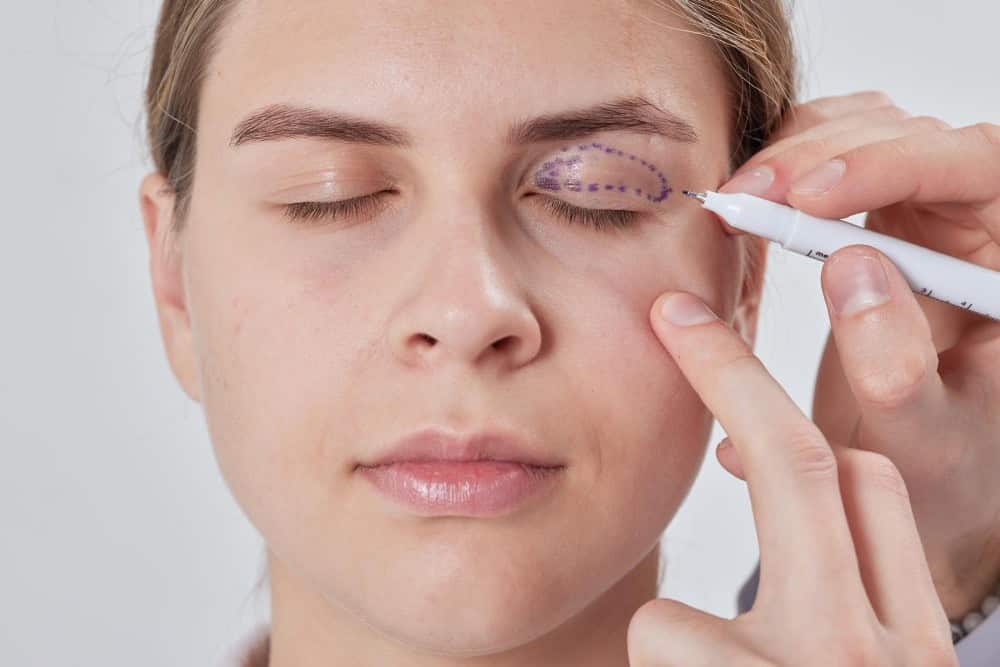
The Procedure: Upper Eyelid Blepharoplasty
Upper eyelid blepharoplasty is typically performed under local anaesthesia with sedation, or under general anaesthesia — the choice depends on whether lower eyelid work is being done simultaneously and patient preference.
The surgeon marks the eyelid crease before the procedure begins, carefully mapping the amount of skin to be removed. Precision matters enormously here — removing too little achieves an underwhelming result, while removing too much can impair eyelid closure, causing dryness and corneal exposure. The natural eyelid crease conceals the incision entirely once healed.
Excess skin is removed. If fat herniation is present, the fat is either removed or redistributed. The incision is closed with fine sutures.
Operative time is typically 45 minutes to one hour for upper eyelids alone.
The Procedure: Lower Eyelid Blepharoplasty
Lower eyelid surgery is somewhat more technically demanding and comes in two main approaches depending on the nature of the problem.
Transcutaneous (external) approach — an incision is made just below the lower lash line, providing direct access to excess skin and herniated fat. This approach allows skin to be removed as well as fat treated, making it suitable when skin laxity is a significant part of the picture.
Transconjunctival approach — the incision is made on the inner surface of the lower eyelid, leaving no external scar. This approach is used when excess skin is not a primary concern — primarily when fat herniation (the puffiness of under-eye bags) is the issue to be corrected, with good overlying skin quality.
The choice between approaches is made based on your anatomy and the primary concerns being addressed. Your surgeon will explain the rationale for their recommendation.
Lower eyelid surgery takes approximately one to one and a half hours.
Recovery: What to Expect
Blepharoplasty recovery is manageable and, for most patients, less uncomfortable than they anticipate — though it does require planning and patience, particularly in the first week.
Days 1–3: Swelling, bruising, and mild tightness are expected and normal. Cold compresses help manage swelling. The eyes may feel dry or sensitive to light. Rest is essential. Head elevation — sleeping with the head raised — reduces swelling.
Days 4–7: Swelling typically peaks around day three before beginning to subside. Bruising progresses through the usual colour changes. Sutures, if non-dissolving, are removed around days five to seven. Most patients feel significantly more comfortable by the end of the first week, though the appearance is still visibly post-operative.
Week 2: Bruising fades considerably. Swelling continues to resolve. Many patients feel comfortable returning to desk-based work and light daily activities. Contact lenses should be avoided for at least two weeks. Reading and screen use can cause eye fatigue and should be moderated initially.
Weeks 3–6: Most residual bruising and obvious swelling has resolved. Results begin to become visible. Eye makeup can typically be resumed after two to three weeks once incisions are sufficiently healed.
3–6 months: Incision lines continue to fade and soften. Final results are fully visible — the eyelids look naturally refreshed rather than operated on. Scars in the eyelid crease are typically very difficult to detect once fully healed.
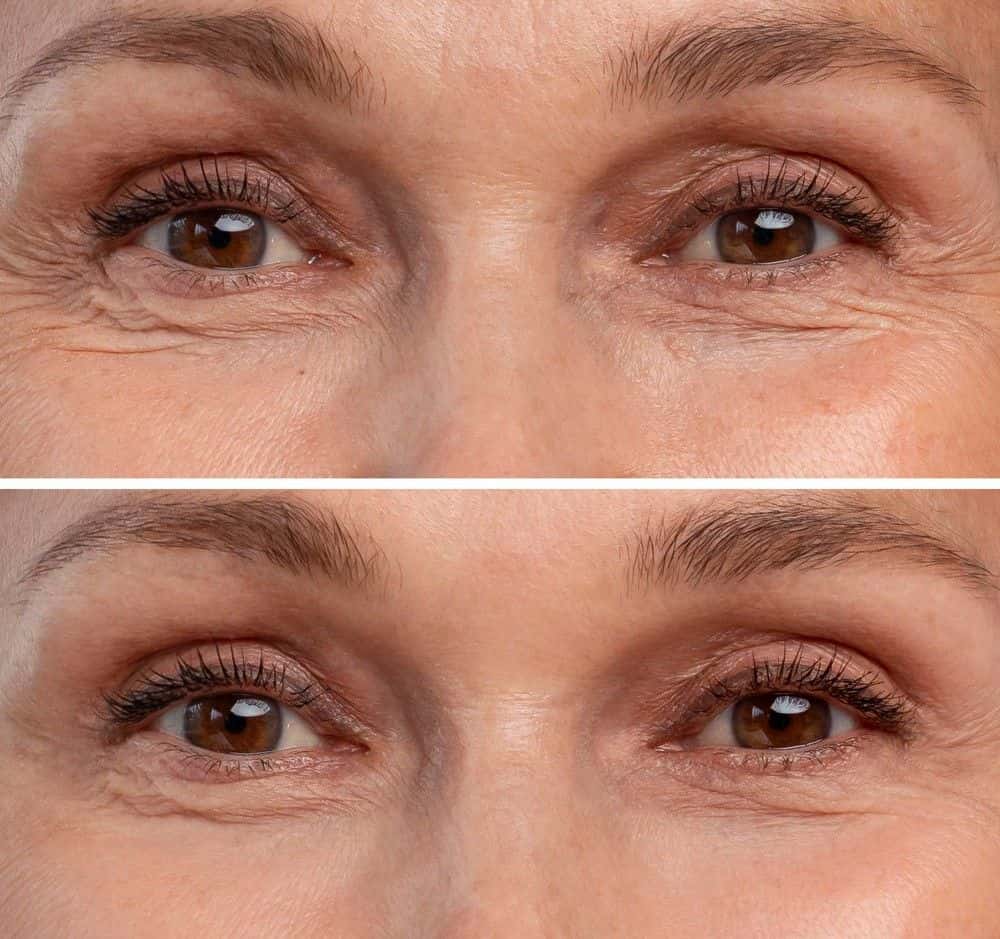
Results: What Blepharoplasty Can and Cannot Achieve
Blepharoplasty consistently produces some of the highest patient satisfaction rates of any facial plastic surgery procedure. The reasons are instructive: results look natural, recovery is relatively contained, and the change — though significant — does not alter the fundamental character of the face.
A well-performed blepharoplasty makes patients look refreshed and rested. It opens the eyes, restores a cleaner upper eyelid contour, and removes the puffiness beneath the eye that communicates fatigue regardless of how the patient actually feels. People often notice that patients look better without being able to identify exactly what has changed.
What blepharoplasty cannot do:
- Eliminate crow’s feet or deep periorbital wrinkles — these are better addressed with injectables or resurfacing treatments
- Correct significant brow drooping — a descended brow pushing down on the upper eyelid requires a brow lift, not eyelid surgery alone
- Permanently prevent the recurrence of any laxity — ageing continues after surgery, though results are long-lasting (upper eyelid results typically last ten or more years; lower eyelid results are often considered permanent for the fat component)
- Treat dark circles caused by pigmentation — blepharoplasty addresses structural shadow from herniated fat, not melanin-based pigmentation
Combining Blepharoplasty With Other Procedures
Blepharoplasty is frequently combined with other facial procedures for more comprehensive rejuvenation:
- Brow lift — when brow descent is contributing to upper eyelid heaviness
- Facelift — for patients addressing ageing across the full face simultaneously
- Fat grafting — to restore volume lost around the orbital area, which can complement the structural improvements of blepharoplasty
- Skin resurfacing or injectables — to address surface texture and fine lines that surgery does not treat
Combining procedures reduces overall anaesthesia time compared to staging them separately and allows the surgeon to approach facial rejuvenation as a coherent whole rather than in isolated parts. The appropriateness of combining procedures depends on your health, the extent of surgery planned, and your surgeon’s assessment.
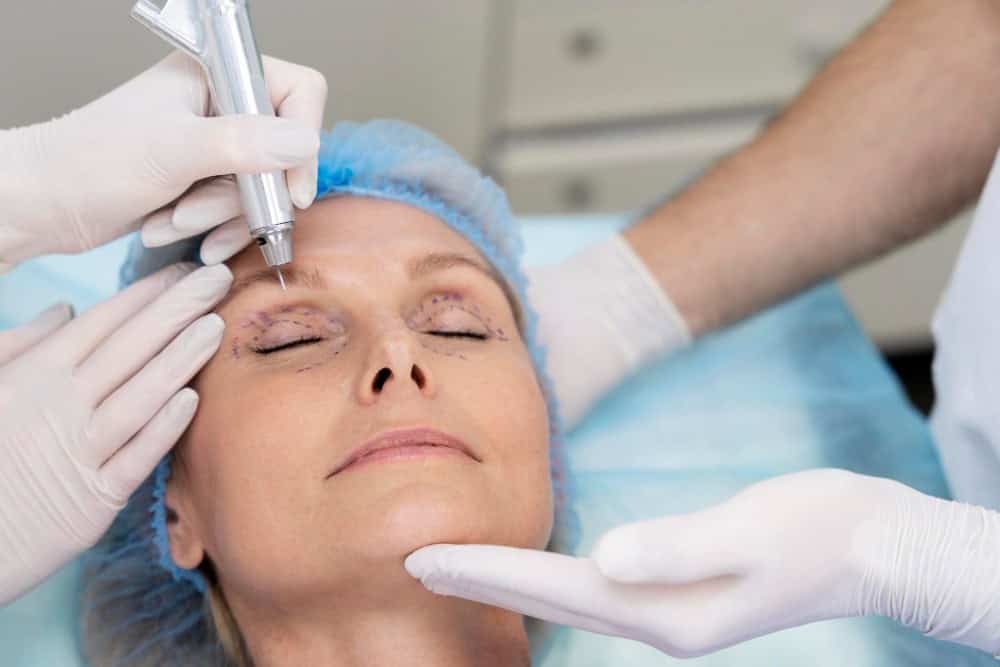
Why Choose Hygeia Hospital for Blepharoplasty
Blepharoplasty is a procedure where surgical precision is paramount. The margin for error around the eye — one of the most anatomically delicate and visible areas of the face — is narrow, and results are immediately apparent.
At Hygeia Hospital, our plastic surgeons bring extensive experience in facial surgery, performing blepharoplasty as part of a comprehensive facial plastic surgery offering. Procedures are conducted within our full-service hospital — with access to specialist anaesthesiology, advanced surgical equipment, and immediate clinical support. For international patients, we provide thorough pre-operative consultation, clear written protocols, and post-operative follow-up coordinated around your travel arrangements.
Hygeia is Albania’s only TEMOS-certified hospital for international patient care — an accreditation that reflects the standard of care every patient receives, whether they travel from Tirana or from across Europe.
Final Thoughts
Blepharoplasty is one of plastic surgery’s most reliably satisfying procedures — effective, natural-looking, and durable. For patients troubled by hooded upper eyelids, persistent under-eye bags, or visual impairment from upper lid ptosis, it offers a meaningful and lasting improvement.
Like any surgery, it requires the right candidate, the right surgeon, and the right facility. Taking the time to find all three is always worth it.
To arrange a consultation with our plastic surgery team, contact Hygeia Hospital here.
Written by the Plastic Surgery Department at Hygeia Hospital Tirana — Albania’s only TEMOS-certified hospital for international patient care.