
If you have started researching facelifts, you have almost certainly come across the term “deep plane.” It is one of the most discussed techniques in facial surgery, often presented as the modern gold standard. But for most patients, it is not obvious what actually separates a deep plane facelift from a traditional one, or whether the difference matters for their particular concerns.
The truth is that both are effective, well-established procedures, and both can produce beautiful, natural results in the right hands. They differ in the surgical layer they work on, and that difference influences how the result looks, how long it lasts and how recovery unfolds. Understanding what sits behind the terminology helps you have a more meaningful conversation with your surgeon rather than choosing based on a buzzword.
This guide explains how the two approaches differ and how to think about which might suit you.

Understanding the Layers of the Face
To understand the difference, it helps to picture the structure of the face. Beneath the skin lies a layer of connective tissue and muscle known as the SMAS. As we age, it is not only the skin that loosens: this deeper layer descends too, taking facial volume downward and creating jowls, deepened folds and a heavier lower face.
A facelift that only tightens the skin, an approach largely abandoned by modern surgeons, tends to look pulled and does not last, because it ignores the deeper structures doing most of the sagging. Both traditional and deep plane facelifts address the SMAS, but in different ways.
How a Traditional Facelift Works
A modern facelift, often called a SMAS facelift, lifts and tightens the skin and the SMAS layer as somewhat separate steps. The surgeon repositions the deeper layer, often by tightening or folding it, and then re-drapes the skin over the refreshed foundation without tension.
This is a versatile, reliable technique that has been refined over decades. It produces natural, long-lasting results for a wide range of patients and remains an excellent choice for many. Because it is so well understood, it can be tailored to different degrees of ageing, from a mini facelift for early changes to a full facelift for more advanced laxity.
How a Deep Plane Facelift Works
A deep plane facelift works at a deeper level. Rather than lifting skin and SMAS separately, the surgeon releases specific ligaments that tether the deeper tissues and lifts the skin and SMAS together as one unit, repositioning the whole block upward and outward.
The theory behind this is that by releasing the tissues where they are actually anchored, the surgeon can reposition the midface and cheek volume more effectively, addressing the folds around the nose and mouth that a more superficial lift may not fully reach. Because the skin and deeper layer move together, there is no separate tension on the skin, which supporters argue gives a particularly natural, un-pulled result.
It is a more technically demanding procedure that requires specific expertise, precisely because it involves working around important structures at a deeper level.
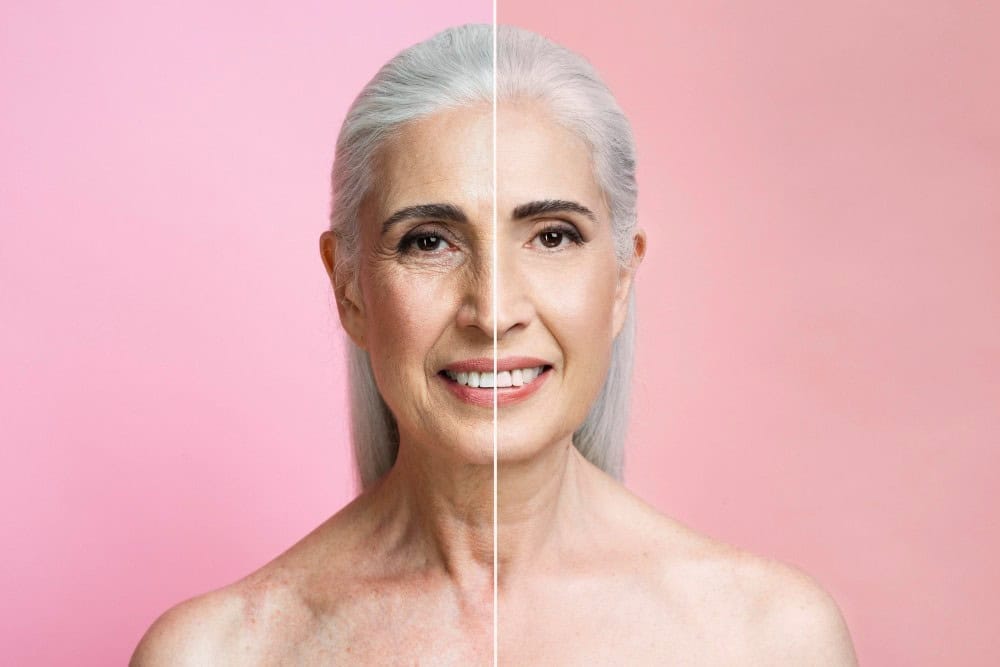
Comparing the Two Techniques
The layer treated. A traditional facelift lifts skin and SMAS, often as separate steps. A deep plane facelift releases deeper ligaments and moves the tissues as a single unit.
Midface and folds. The deep plane approach is often favoured for repositioning cheek volume and softening the folds running from the nose to the mouth. A traditional facelift focuses strongly on the jawline and lower face and can also be very effective.
Naturalness. Both, done well, look natural. Because the deep plane moves skin and deeper tissue together, its advocates highlight a particularly seamless result, but a skilled traditional facelift avoids a pulled look too.
Recovery. Deep plane surgery can involve more initial swelling because of the deeper work, though this varies by patient and surgeon. Both require a similar overall healing arc.
Suitability. The best technique depends on your anatomy and goals, not on reputation alone. Some faces benefit clearly from the deep plane approach; others achieve an excellent result with a traditional lift.
Which One Is Right for You?
This is the key point: neither technique is universally “better.” The right choice depends on your facial anatomy, the areas that concern you most, the degree of ageing, and your surgeon’s assessment and expertise.
A patient whose main concern is midface descent and deep folds may be an ideal candidate for a deep plane facelift. A patient focused on the jawline and neck, or with earlier signs of ageing, may achieve everything they want with a traditional facelift or even a mini facelift. Many patients also combine a facelift with a neck lift or eyelid surgery such as blepharoplasty for a balanced rejuvenation.
What matters more than the label is the surgeon. A skilled, experienced facial surgeon will recommend the approach that gives you the most natural result, rather than applying one technique to everyone. Our article on how facelift results look and how to keep them natural explores this further, and for those weighing surgery against less invasive options, facelift vs non-surgical alternatives is a helpful read.

Is There a Right Age or Time for a Facelift?
Patients often ask whether they are too young or too old for a facelift. There is no single correct age. What matters far more than the number is the degree of facial ageing and the individual’s health. Some people develop noticeable jowls and midface descent earlier, while others retain firmer tissues well into later life.
That said, patients who address moderate ageing tend to enjoy their results for a long time and often find the change looks especially natural, because the surgery is refreshing rather than dramatically reversing years of change. Older patients in good health also achieve excellent, transformative results. The key is health rather than age: being a non-smoker or willing to stop temporarily, having well-controlled medical conditions and holding realistic expectations all matter more than a birthday.
Timing within your own life also plays a role. Planning surgery when you have a clear stretch for recovery, without major events immediately afterward, allows healing to progress without pressure. For international patients, this means building in enough time in Albania for the initial recovery before travelling home.
The Value of a Personalised Assessment
Because the face ages in a combination of ways, at the skin, in the deeper layers, through volume loss and in the neck, the most effective plans are rarely about a single technique. A thorough consultation looks at the whole picture and may recommend a facelift alone or in combination with other refinements. This individualised approach is what separates a natural, harmonious outcome from one that looks operated on. It is also why comparing techniques in the abstract only goes so far: the decision becomes clear once a surgeon has examined your specific face and listened to your goals.
What Recovery Looks Like
Recovery from a facelift, whichever technique is used, follows a broadly similar path. Swelling and bruising are most noticeable in the first week to ten days and then steadily improve. Most patients feel presentable enough for low-key social settings within two to three weeks, though subtle swelling continues to resolve for longer.
Incisions are placed discreetly, usually around the ear and into the hairline, where they heal into fine, well-hidden scars. A supportive dressing is worn initially, and strenuous activity is paused for several weeks. The final, settled result emerges over the following months. Our recovery after plastic surgery guide gives a fuller overview of what to expect.
Why the Setting Matters
A facelift is a significant procedure performed under anesthesia, and the environment is an important part of safety. A hospital-based facial surgery department provides modern operating theatres, experienced anesthesia care, medical-grade sterilization and full emergency backup, which standalone clinics cannot always match.
Hygeia Hospital performs facial surgery within a purpose-built medical facility and supports international patients throughout their journey through its medical tourism service, from pre-travel video consultation to post-operative follow-up.
Final Thoughts
The deep plane versus traditional facelift debate is less about which technique wins and more about which is right for a given face. Both work on the deeper structures that cause ageing, both can look beautifully natural, and both offer long-lasting results. The deep plane approach offers particular advantages for the midface, while the traditional facelift remains a versatile, proven choice.
Rather than choosing a technique from an article, the wisest step is a consultation with an experienced facial surgeon who can examine your face and recommend the approach best suited to your anatomy and goals.

Frequently Asked Questions
Is a deep plane facelift better than a traditional facelift?
Neither is universally better. The deep plane approach can be especially effective for the midface and deep folds, while a traditional facelift is versatile and proven. The right choice depends on your anatomy and your surgeon’s assessment.
Does a deep plane facelift last longer?
Both techniques offer long-lasting results because they address the deeper SMAS layer rather than just the skin. Longevity also depends on individual factors such as skin quality and lifestyle.
Is the recovery different?
The recovery arc is broadly similar, though a deep plane facelift may involve more initial swelling due to the deeper work. Most patients feel socially presentable within two to three weeks.
Are the scars noticeable?
Incisions are placed around the ear and into the hairline, where they typically heal into fine, discreet scars that are easy to conceal.
Can a facelift be combined with other procedures?
Yes. Facelifts are often combined with a neck lift or eyelid surgery for a balanced, harmonious rejuvenation, depending on the patient’s goals.